
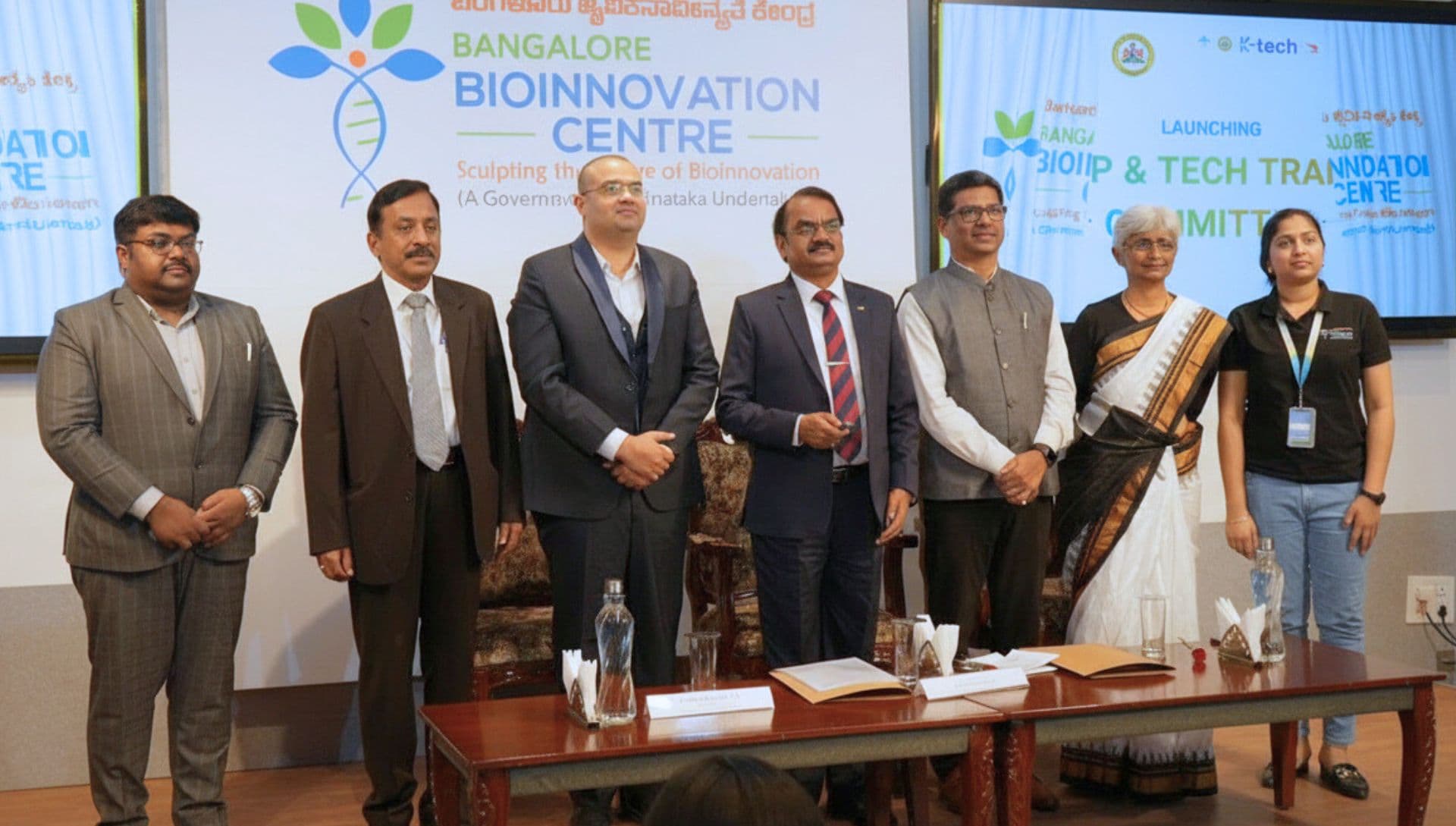
Bengaluru, January 20: Innovation becomes truly impactful only when educational institutions and industry collaborate to address real-world challenges, said Dr. Mylswamy Annadurai, Former Director of ISRO, while inaugurating the BBC 2.0 Catalyst Program at the Bangalore Bioinnovation Centre (BBC), Government of Karnataka.
The BBC 2.0 Catalyst Program, organized by the Bangalore Bioinnovation Centre in collaboration with K-Tech, aims to strengthen the connection between skill development, innovation, and self-employment by fostering closer academia–industry partnerships.
Addressing Global Challenges
Speaking at the event, Dr. Annadurai emphasized that while infrastructure and facilities exist in sectors such as healthcare, the growing demand from an increasing population necessitates advanced technologies and innovative solutions. He also highlighted the vast opportunities in the energy sector, stating that responsible and focused innovation can convert existing challenges into sustainable opportunities.
Highlighting Bengaluru’s innovation potential, Dr. Annadurai noted that the city, powered by its strong IT and biotechnology ecosystem, has the capacity to emerge as a global hub for innovation-led development.
Innovation in Agriculture
Addressing innovation in agriculture, Dr. Annadurai pointed out that India, being an agrarian nation, leads the world in banana cultivation. He explained that banana pseudostems, which are typically discarded after harvest, pose waste management challenges for farmers. Through research-driven innovation, this agricultural waste can be recycled and repurposed into valuable products, thereby creating economic value while addressing environmental concerns.
Lessons from Space Exploration
Drawing parallels with India’s space exploration achievements, Dr. Annadurai referred to the global recognition of the Chandrayaan mission. He stated that while numerous lunar missions have been attempted worldwide, Chandrayaan stood out due to its unique and comprehensive approach to studying the Moon. He emphasized that innovation lies in perspective, adding that with the right blend of talent, technology, and collaboration, India is steadily advancing toward the forefront of the global innovation ecosystem.
Leadership Vision
Speaking on the occasion, Dr. Manjula N, IAS, Secretary, Department of Electronics, IT and BT, Government of Karnataka, and Chairperson, Bangalore Bioinnovation Centre, along with Mr. Rahul Sharanappa Sankanur, Managing Director, Department of Electronics, IT and BT (GoK) and Director, BBC, highlighted the new phase of BBC 2.0 and its expanded initiatives under Beyond Bengaluru. They noted that collaborations with NABARD and RKVY are playing a significant role in promoting innovation-driven solutions in agriculture.
They further emphasized the importance of focusing on nutrition, value addition, and sustainable food systems for Karnataka’s long-term development. The establishment of the BBC NABARD–RKVY Agri Innovations Centre, along with the Bangalore Biobank and Data Bank at BBC, was highlighted as a key step toward strengthening the state’s life sciences and agri-innovation ecosystem.
"BBC 2.0 has demonstrated success and holds strong potential to reach a wider range of stakeholders and attract greater support. With sustained collaboration between academia, government, and industry, BBC 2.0 can evolve into a sustainable model platform for innovation in Karnataka."
Distinguished Guests
The event was attended by several distinguished dignitaries, including Dr. Mohamed Adil A.A., Managing Director, Bangalore Bioinnovation Centre; Dr. Vijayabaskaran Sundararaju, Executive Director, Kauvery Hospital; and Dr. Uma Nambiar, Director, IISc Medical Foundation, among others.
Press Releases
Industry-Academia Tie-ups Key for Innovation (Deccan Herald)